
Go to page 87 to read about our Asivikelane campaign in Tshwane Annual Report – https://www.tshwane.gov.za/wp-content/uploads/2026/02/22.-The-Consolidated-Audited-Annual-Report-for-CoT-2024-2025.pdf
The recognition of the Asivikelane campaign in the City of Tshwane’s 2024–2025 Annual Report marks an important milestone for community-driven accountability and collaborative service delivery.
It reflects what municipalities are legally and constitutionally mandated to be: responsive institutions that work in partnership with the communities they serve.
For Planact, the International Budget Partnership of South Africa and 1 to1 Agency of Engagement, this recognition affirms what residents in informal settlements have long known: when communities are meaningfully involved, better outcomes are possible.
“The support provided by this campaign not only includes waste management handling matters but also training and capacity building on understanding government systems in totality…,” the 2024/25 Tshwane Annual report reads.
A Partnership Rooted in Community Reality
Across informal settlements, residents continue to face persistent challenges with waste management, illegal dumping, and inadequate municipal services.
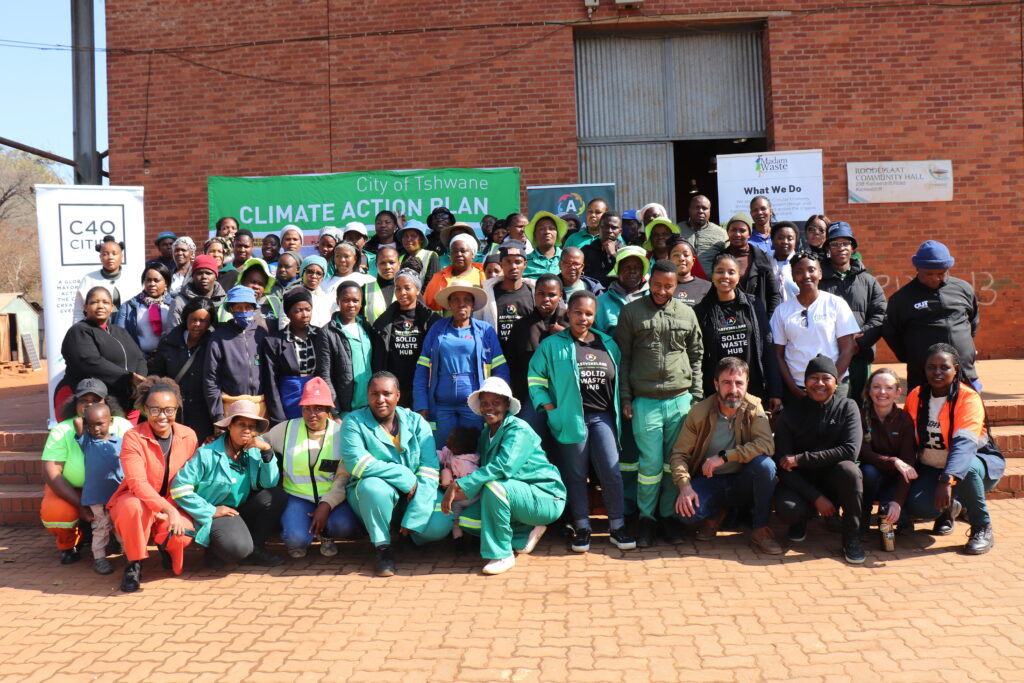
In response, the Asivikelane campaign developed a comprehensive strategy in partnership with the City of Tshwane Environment Management Department aimed at strengthening waste management in underserved areas.
Asivikelane emerged as a critical partner, not simply as an implementer, but as a bridge between communities and government. The strategy that was recently approved by council ensured that the City of Tshwane (CoT) and informal settlement residents (including informal waste pickers) will work together to monitor and improve the City’s current waste management processes.
Through multi-stakeholder collaboration, the Asivikelane campaign has supported:
- Door-to-door awareness campaigns promoting the 5Rs (Reduce, Reuse, Recycle, Recover, Refuse)
- Composting initiatives
- Upcycling
- Rehabilitation of dumpsites
- Community education on sustainable waste management practices
- Strengthened engagement between residents and municipal officials
By highlighting the Asivikelane work in its annual report, the City of Tshwane affirms that participatory governance and community-led monitoring is crucial for enhancing service delivery.
Beyond Waste Management in Tshwane
The Asivikelane multi-stakeholder approach goes beyond technical waste interventions. By strengthening community organisation and understanding of government systems, the campaign helps residents to engage more effectively on a range of service delivery issues.
In Tshwane, this has included support linked to broader community well-being concerns such as:
- Safety around communal infrastructure
- Improved communication channels with the municipality
- Access to community support services
- Health and wellness of residents
- Addressed unemployment through Social Employment Fund (SEF)
This holistic approach reflects Planact’s long-standing commitment to deepening participatory governance and making towns and cities work for people.
The Recognition Is a big milestone, not the finish line
While the feature in the City’s annual report is encouraging, significant challenges remain in many informal settlements. Sustained progress will depend on:
- Continued municipal responsiveness
- Ongoing investment in community partnerships
- Consistent monitoring of service delivery
- Sustainable funding model/framework for the strategy
Planact and the Asivikelane partners remain committed to working alongside communities and municipalities to ensure that recognition translates into lasting, measurable improvements on the ground.
The power of collaboration
The Tshwane experience demonstrates the power of collaborative governance when communities are treated as partners rather than passive beneficiaries. As urban pressures intensify, community-led models like Asivikelane offer practical pathways for towns and cities seeking to improve basic municipal services.
Planact will continue to document lessons, strengthen partnerships, and advocate for a responsive, people-centred urban governance across South Africa.