
This article was first published on News24 on the 9th of September 2026.
Every year South Africans pause to listen.
The President delivers the State of the Nation Address (SONA), setting out government’s achievements, acknowledging crises and promising a path forward. Premiers follow with their State of the Province Addresses (SOPA), while executive Mayors deliver State of the City Addresses (SOCA), outlining municipal performance, budget priorities and service delivery plans.
These speeches are more than ceremonial occasions. They are intended to be moments of setting democratic accountability opportunities for elected leaders to explain where we are, where we are going and how they intend to get us there.
But somewhere between the Cape Town City Hall and our street corners, accountability disappears.
The missing piece in South Africa’s democratic architecture is surprisingly obvious: there is no State of the Ward Address.
Whilst there are hefty events budgets spent on funfair hosting the SONA, SOPA and SOCA including red carpet appearances, the same is not done at my ward, where service delivery must take place.
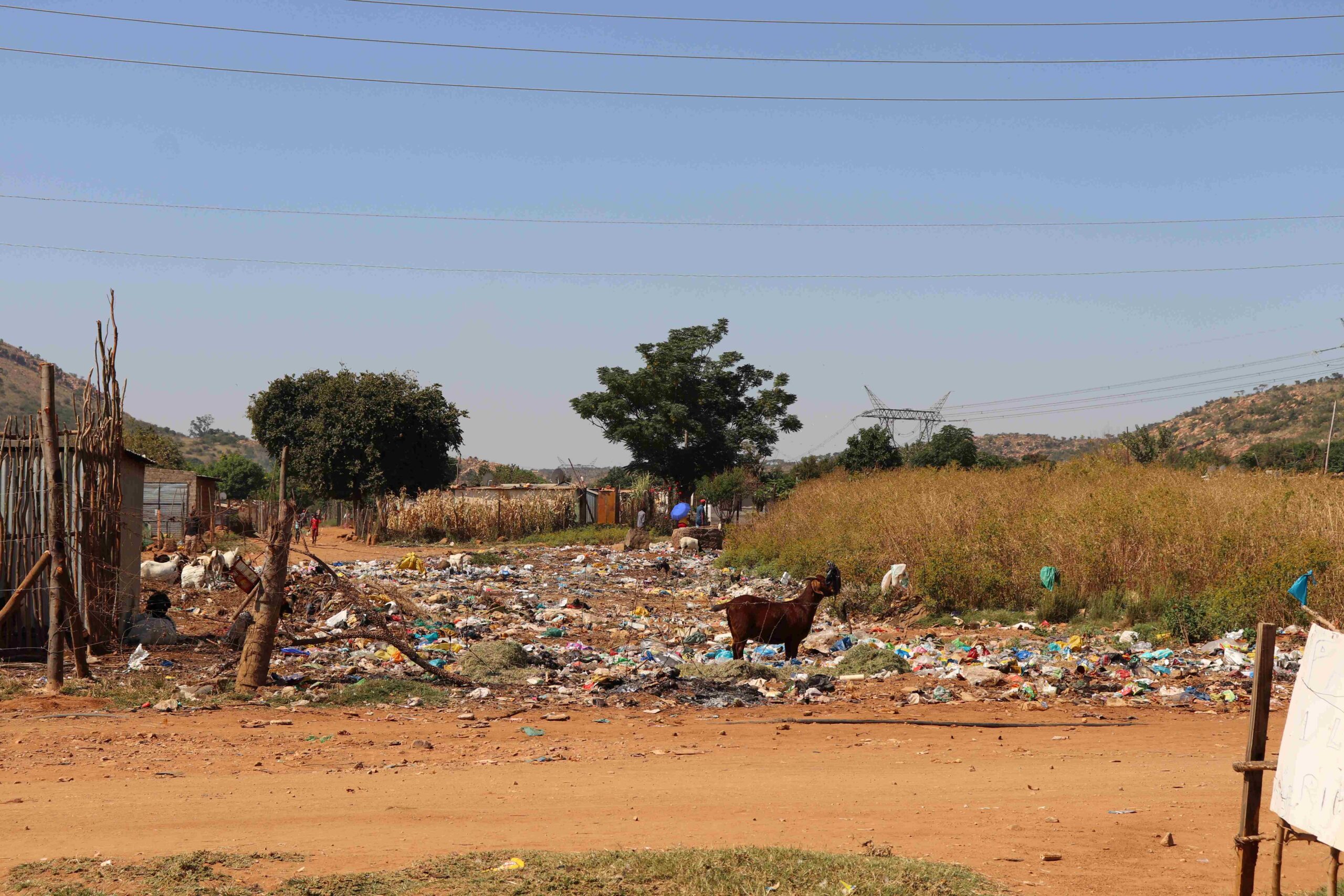
South Africa’s democracy begins not in Cape Town or at provincial legislature but at ward level, in my street. It is here that potholes remain unfilled, refuse goes uncollected, illegal dumping spreads or neighbourhood safety becomes a concern. It is here where residents first experience the successes or failure of local government. If democracy is ultimately assessed by people’s everyday lived experiences, then at the ward level is where government either earns or loses public trust.
The ward councillor is arguably the first citizen of the ward, much like the President, Premier and Mayor are the first citizens of their respective spheres of government. Somehow, while these leaders are expected to account publicly every year, ward councillors face no equivalent obligation to stand before their communities and explain their performance, priorities or plans.
That omission deserves scrutiny.
Perhaps legislation never anticipated such a requirement. Perhaps it was an oversight. Or was it a deliberate omission, by design or default? Or perhaps we have simply accepted that accountability becomes weaker the closer government gets to ordinary people?
None of this suggests that ward councillors possess powers they do not have. A councillor cannot end load shedding, fix the segregated spatial planning, fix the national economy or solve every service delivery failure overnight. But that is precisely why expectations should focus on what they can influence.
Imagine every newly inaugurated Ward Councillor convening a State of the Ward Address. The meeting would certainly not be another political rally or election campaign. Instead, it would become an annual social contract between residents and their elected representative.
The councillor could present the state of the ward: Which infrastructure projects are underway? What are the biggest service delivery bottlenecks? What crime prevention partnerships exist? Which parks require rehabilitation? What progress has been made on informal settlement upgrading? How is the municipality responding to community needs? More importantly, the councillor could outline measurable commitments for the year ahead, just as the SONA does.
How will communication with residents improve. How often will public meetings be held? What mechanisms will ensure that every street, block or neighbourhood receives attention? How the councillor will strengthen participation during the Integrated Development Plan (IDP) and municipal budget processes. How will vulnerable groups such as the elderly, women, people living with disabilities and young people be included in decision-making?
Leadership at ward level requires more than attending council meetings. It requires integrity, accessibility and visibility. It demands the ability to connect municipal processes with community realities. Effective councillors should be innovators, problem-solvers and conveners bringing together residents, businesses, schools, faith-based organisations, civic groups and government departments to solve local challenges collectively.
The possibilities extend well beyond municipal administration.
Why should every ward not have a “Taking the Councillor to the People” programme, where councillors spend time walking every section of the ward instead of waiting for residents to come to them? Medical doctors do this in wards. After all, Parliament has long embraced initiatives to take democracy to communities.
Too often, residents know the political party they voted for but cannot identify the councillor elected to represent them. It often sounds like “we have all attended the party, but nobody seems to know the host”. Every five years, election posters disappear. Campaign promises fade. The relationship between representatives and residents becomes transactional, resurfacing only during the next election cycle. Or could this be the participatory democracy?
Ward committee meetings should also become more transparent. Residents should be encouraged to observe proceedings, understand how decisions are made and see whether community concerns are genuinely being represented. Transparency builds trust, and trust strengthens democracy.
Ward councillors could also become catalysts for local economic development.
Imagine every councillor convening an annual breakfast meeting with local businesses to encourage them to “adopt one unemployed youth” in their small business and mentor young entrepreneurs, provide internships or offer practical work experience to unemployed youth. Small interventions, coordinated effectively, can produce meaningful local impact.
Likewise, councillors could champion environmental clean-up campaigns, heritage and tourism initiatives, much like “Kasi Skoonmaak” in Wattville, Benoni or strengthening social cohesion in a predominantly black Orlando East and predominantly coloured Noordgesig, both in Soweto. These are not peripheral activities; they improve the quality of life within the ward.
Perhaps the most transformative step would be for every ward councillor to sign a performance compact with the local residents. These would commit them to measurable objectives and agreeing to be assessed annually through community satisfaction scorecard, similar to municipal score cards. Accountability should not be reserved for election day every five years.
Democracy is strongest when accountability becomes routine rather than special occasion.
The ward councillor is the thread holding together the fabric of local democracy. Yet too often that thread appears only briefly during election campaigns, walking our streets, knocking on our doors and asking for our vote, before disappearing into the machinery of municipal politics. South Africa does not need another layer of bureaucracy. It needs a stronger culture of accountability where government is closest to the people.
Perhaps it is time to institutionalise the State of the Ward Address.
Because democracy should not only speak from the podiums of Parliament. It should speak from our community halls, Informal settlements, suburbs, rural areas and street corners where citizens live. This is where government is experienced and where trust in our democracy is ultimately won or lost. Prick the balloon!!