
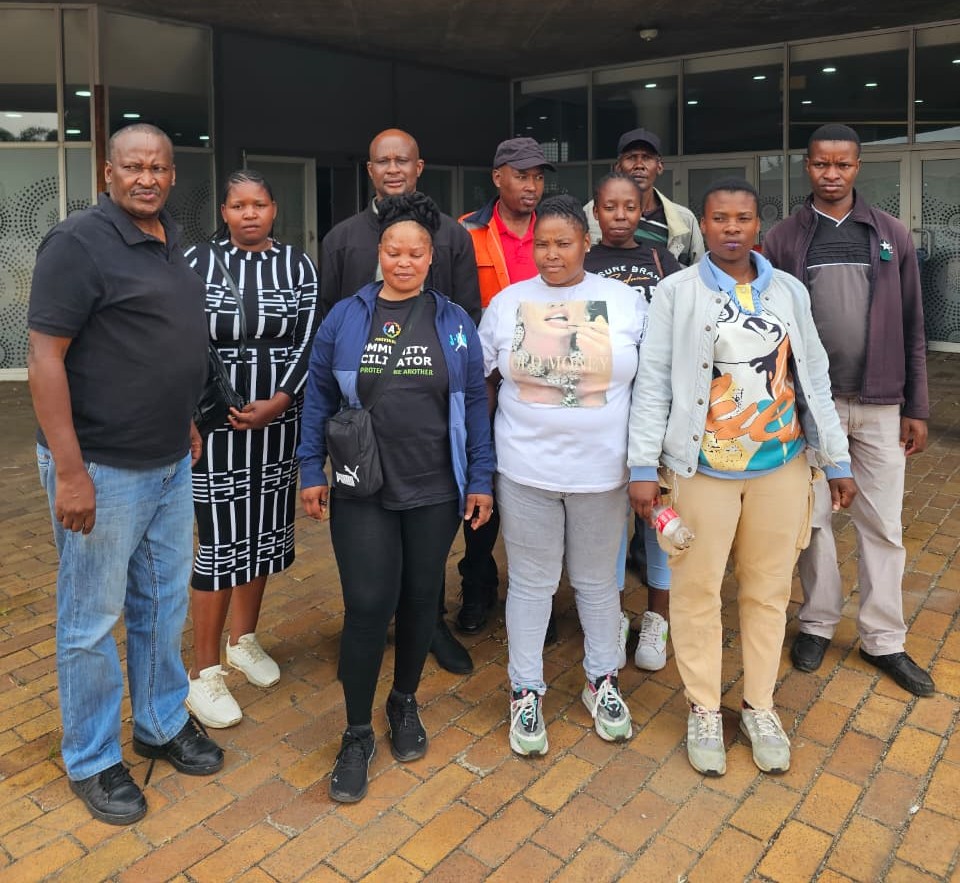
Ekurhuleni – 20 January 2026
Residents of Mkhancwa informal settlement voiced mounting frustration over long-standing housing promises during a City of Ekurhuleni Human Settlements Oversight Committee meeting held at the municipality’s Old Council Chamber on 20 January 2026.
The meeting, attended by community representatives from Mkhancwa, Ward 82 Councillor Buitendacht, members of the Oversight Committee, City of Ekurhuleni Human Settlements Department officials and Planact, aimed to provide a platform for residents to raise concerns directly with municipal leadership and collectively chart a way forward.
Two Decades of Uncertainty
Leading the Mkhancwa community delegation, Mr Vusimuzi Mngomezulu outlined two primary concerns. The first dates to 2004, when the municipality reportedly committed to securing alternative land for residents after it emerged that portions of the settlement are privately owned. The second relates to the status of a proposed relocation to the Brakpan Old Location mega-housing project.
“In both instances there has been no visible progress,” Mngomezulu told the Committee.
The informal settlement has long partnered with Planact, which supports communities in engaging with municipalities.
Disputed Housing Lists and Allegations of Bias
Another community representative, Ms Duduzile Skhosana, said residents had acted in good faith following advice allegedly given in 2022 by the then MMC for Housing, Cllr Madihlaba, to compile a list of qualifying housing subsidy beneficiaries.
Skhosana said community leaders conducted a door-to-door process prioritising elderly residents and people living with disabilities. This followed what she described as a municipal claim that only four Mkhancwa residents appeared on the official Housing Subsidy Scheme database.
“According to the list we compiled, there were far more qualifying people,” she said.
Despite assurances that the four qualifying beneficiaries would be prioritised for relocation, Skhosana said five years had passed without action. She further alleged that individuals perceived to be closer to the Ward Councillor were benefiting from housing opportunities, leaving others behind.
“The people that we voted into office together with the Councillor leave us behind while benefitting in projects,” she said. Allegation that the Ward Councillor strongly disputed.
Councillor Buitendacht strongly rejected the allegations.
Residents also criticised what they described as a lack of communication from the Ward Councillor, including failure to convene meetings or respond to emails. In response, Buitendacht stated that his vehicle had previously been burned in the community, raising safety concerns about holding meetings in the area. The issue of unanswered emails remained unresolved during the session.
Demarcation Concerns
Community representative Simphiwe Mokoena raised concerns about rumours that Mkhancwa may fall under Ward 105 following new municipal demarcations. Residents fear this could affect their beneficiary status in the Brakpan Old Location project.
Committee Chairperson Cllr Siphumule Ntombela clarified that ward demarcation falls under the Municipal Demarcation Board and is outside the Committee’s mandate. However, he indicated that the development should not negatively affect the community’s beneficiary status.
Committee Dynamics Questioned
During deliberations, councillors largely focused on responding to criticisms directed at the Ward Councillor. Some attendees perceived this as a defence of the councillor rather than an impartial interrogation of the issues raised.
Several councillors cautioned against acts of violence, including the burning of vehicles and destruction of property, stressing that such actions undermine community engagement. At times, the discussion shifted toward explaining municipal processes and structures, turning parts of the meeting into what resembled an educational session.
While informative, some participants questioned whether the Oversight Committee forum was the appropriate platform for such engagement.
Upgrading Plans and Land Acquisition
Planact used the opportunity to enquire about progress on the Department’s 2021 Upgrading of Informal Settlements Programme (UISP) plans for Mkhancwa. Official documents confirm that the settlement falls under Category A of the UISP, which qualifies it for in-situ upgrading.
However, parts of the land are reportedly unsuitable for development due to wetland conditions and the presence of a railway line. These constraints complicate reblocking and electrification efforts.
The Acting Head of Department presented a map outlining current plans. Mkhancwa is linked to the Ergoroad project, where 12 properties have been identified for possible acquisition. A budget adjustment submission has been made to purchase the land, subject to approval. Upgrading of the settlement is contingent on securing this land.
Regarding relocation, officials reported that bulk infrastructure is currently being implemented at the Brakpan Old Location project, which is expected to accommodate approximately 6,777 households. Other informal settlements earmarked to benefit include Brakpan North and Never-Never.
The four Mkhancwa residents previously identified as qualifying beneficiaries have reportedly been prioritised in the Helderwyk mega-housing project, a provincial initiative. The Committee chairperson queried whether more residents could be included. Department officials indicated they have limited control over provincial projects but are open to engaging relevant authorities. They added that qualifying residents have been incorporated into migration plans linked to Brakpan Old Location.
Awaiting Concrete Timelines
The meeting concluded with a commitment to possible further engagements, either through the Oversight Committee or direct discussions between community representatives and the Department.
For Mkhancwa residents, however, the central concern remains unchanged: after more than two decades of promises, they are still waiting for tangible progress and clear timelines on their housing future.