
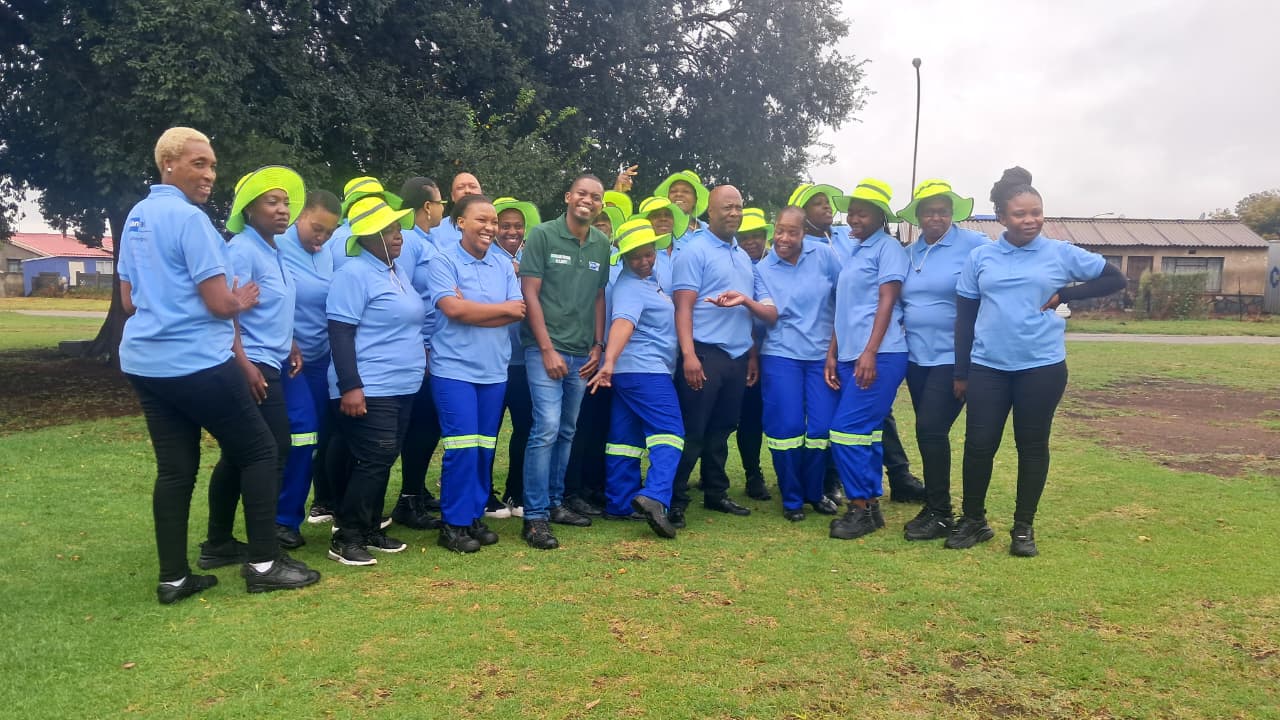
Wattville is a historic township established in 1941 and is located south of Benoni within the Ekurhuleni Metropolitan Municipality in Gauteng.
Planact’s long-standing relationship with the community and partnership initiatives towards socio-economic development made it an ideal location for the organisation to launch the Social Employment Fund (SEF) Health and Wellness intervention for the third time in a row. The team says that the Wattville community is in ’safe hands’ with the Health and Wellness team making sure of that every single day.
In a community where many vulnerable, elderly, disabled, and sick individuals often lack consistent support, the SEF Health and Wellness team is committed to caring for those most in need.
Each day begins at 7:15am, with participants clocking in until 8:00am. They then join other SEF Teams in the community - the Greening & Environment and Food Security teams, for a 10-minute daily prayer, after which they separate into their respective themes.
The Health and Wellness team meet at a church to discuss the day’s plan, organise themselves into groups, and prepare for their screening process.
The Health and Wellness Team’s Line of Work includes:
- Collecting medication from the clinic for the elderly.
- Cleaning for the elderly.
- Ensuring that the elderly have food, especially when neglected by their families, and that they are supported with their hygiene and cleanliness.
- Encouraging chronic patients to continue taking their medication, particularly those who have missed doses. (the word default can sound harsh/insensitive)
- Access support services for individuals struggling with substance abuse.
- Organising food parcels for the less fortunate, and
- Arranging for social workers to provide emotional and psychological support.
The screening process:
The team conducts screening twice a week, reaching about 250 households a month. One day is set aside for reporting and another for cleaning support for elderly residents. During visits, members greet residents, introduce their work, and respectfully request consent before conducting screening questions.
The following are screening questions asked by the team:
- Name and surname.
- Number of people living in the house.
- If there are elderly people, including age (if disclosed).
- If there are mentally challenged people in the household.
- Need for mobility assistance (wheelchair or walking stick), with arrangements made at Actonville Clinic if needed.
- If there are people living with disabilities in the household.
- Elderly people requiring chronic medication collection from hospitals like O.R Tambo or Charlotte Maxeke, with arrangements made for a runner to assist at an affordable cost.
- Presence of drug users willing to receive assistance, with referrals to South African National Council on Alcoholism and Drug Dependence (SANCA )and other organizations, and encouragement for family support through separate programmes.
They then listen to the family’s needs and identify areas where they can assist.
Behind every initiative are real people whose lives are touched in meaningful ways. To illustrate the impact of this programme, the following case stories highlight the experiences of individuals who have benefited from the work on the ground.
Case 1: A Family Compound (Yard) in Wattville Township with Four Generations
During one of their screenings, the team came across a family compound (Yard) with four (4) generations living in conditions of deprivation. The families include elderly members who have C-forms for RDP houses yet are still living in overcrowded circumstances.
One household within this compound caught the attention of the team. Moved by their situation, the team decided to offer a helping hand. They reached out to community members for donations and partnered with Lithandza to provide food parcels, which were distributed to the family. The team not only requested donations from the community but also contributed from their own pocket to fix the broken windows for the family.
There are currently 28 people living in that family compound, and the team continues to hope for more assistance from those who can help.
Case 2: Restoring Dignity and Peace in the Household
In another case, the team met an elderly man living with his grandson, who is facing challenges related to substance use. The situation has placed strain on the household, with concerns that the grandfather’s basic needs, including food and a sense of safety, are not always being met.
The team responded with compassion, engaging the grandson in a respectful conversation about his challenges and gently exploring the factors which may have contributed to his substance use. Following this, he made the decision to seek help and presented himself at the police station, requesting assistance to access rehabilitation services.
Meanwhile, the team continues to support the elderly man by helping to ensure he has access to food and basic necessities. During a follow-up visit, he shared that the situation at home has improved. His grandson no longer brings friends into the house, and a greater sense of calm has returned. He now spends his days more peacefully, often keeping himself occupied with reading.
Ongoing Support and Community Partnerships
The team maintains a list of beneficiaries within the community, including:
- Families in need of food parcels.
- People struggling with substance use, in need of support.
- Nappies and clothing distribution.
- Individuals that require medication to be collected from the clinic.
- To effectively assist their community, the team works closely with their local clinic.
Currently, four of their team members are training to become certified healthcare workers while also volunteering at their local clinic. Five team members have attended a basic HAST (HIV, AIDS, Sexually Transmitted Infections, TB) program hosted by NexGen Capacity Hub, managed by HIVSA.
The SEF Health and Wellness team’s work has motivated and interested the founder and members of the Olerato Care Ability Centre, who have joined their day-to-day work within the community. Olerato Care Ability Centre focuses on assisting parents with understanding and accepting their children’s disabilities, while also educating children with disabilities that are enough and are loved just as they are.
The team’s work has a real impact, as seen in case stories from the community. The Health and Wellness team’s hard work is motivated by the love and care they have for their community.
The link to the video below demonstrates the SEF Health and Wellness team’s activities, illustrating how they keep the community in “safe hands”. Please see the team in action as they provide essential services to their community.